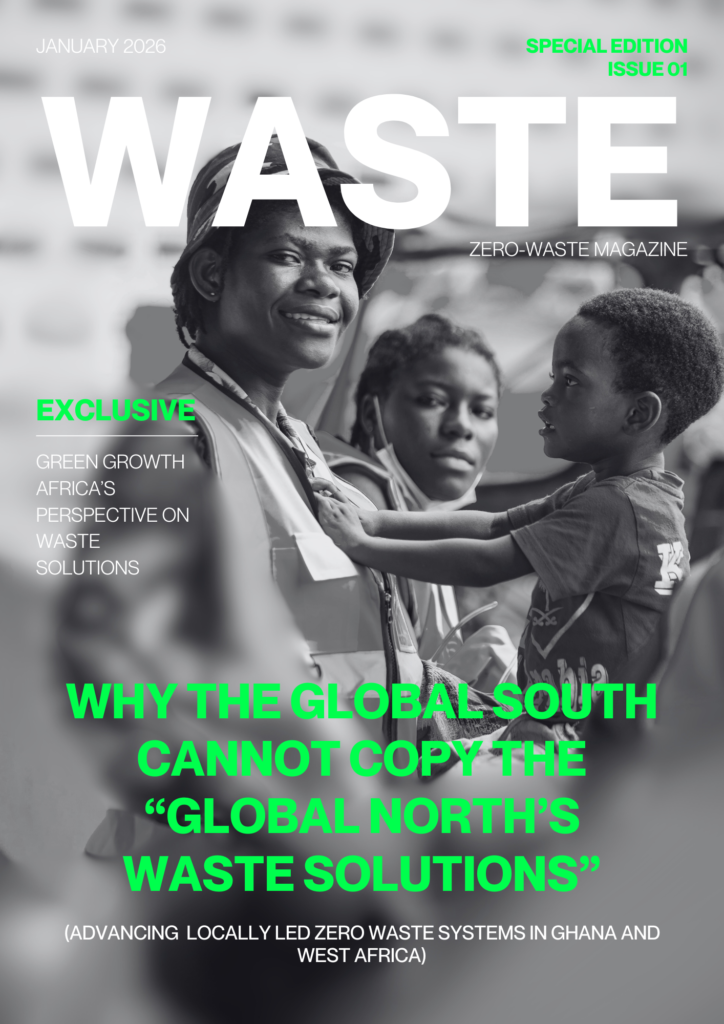
Discussions around waste management and climate action have become topical in recent years, with many development practitioners, government ideologists and general public aligning towards high tech recycling plants, waste-to-energy facilities, incinerators and ‘ambitious’ circular economy frameworks. These ‘solutions’ often implemented in the Global North (wealthy countries) with established infrastructure, regulated systems, and significant public investment often fall short of solving real problems faced by everyday communities in Ghana, Kenya, Liberia, Nigeria, and other low and middle income countries. Often, these ‘solutions’ believed to be contemporary, promises relief and lasting impact yet delivers a shadow of what was hoped for, leaving many practitioners in disbelief after huge investments are made. These solutions rather than minimizing waste, births a culture of creating more refuse, building dependencies and empowering major polluters, while reducing jobs for ordinary community members.